Educational Tracing Worksheets for Toddlers
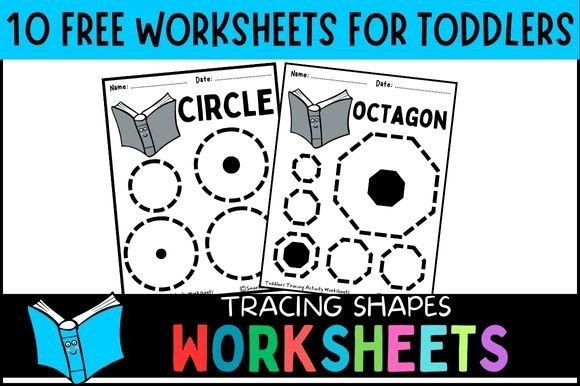
When searching for early learning materials for young children, parents and educators often encounter sets of printable activities designed to build foundational skills. One such resource is a collection of 10 worksheets for toddlers focused on shape recognition and tracing. This specific set introduces ten common 2D shapes: circle, square, triangle, pentagon, hexagon, octagon, star, pill, ellipse, and diamond. Each worksheet features these shapes in a dashed, line format perfect for tracing, aiming to improve pencil control and fine motor skills. Understanding what this resource offers, its potential benefits, and its limitations can help caregivers make an informed decision about its suitability for their child's developmental journey.
What Are Shape Tracing Worksheets?
The 10 worksheets for toddlers centered on drawing shapes are a structured, printable activity pack. Their primary function is to provide a guided introduction to geometry for very young learners. The worksheets do not teach shapes in isolation; they combine shape exposure with a practical motor skill task. The dashed-line format acts as a visual guide, encouraging the child to follow a path with a pencil or marker. This design is intended to reduce frustration by offering clear boundaries, making it an accessible first step in drawing. Furthermore, the materials are often designed for reuse—they can be printed multiple times or laminated for use with dry-erase markers, which adds a practical element for repeated practice.
Potential Benefits and Developmental Goals
For caregivers considering this resource, several aligned developmental goals stand out. First, the activity directly targets fine motor skill development and pencil control. The act of tracing requires hand-eye coordination and precise muscle movements in the hand and fingers, which are precursors to writing. Secondly, it offers early mathematical exposure by familiarizing toddlers with a variety of 2D shapes, from basic ones like circles and squares to more complex forms like hexagons and octagons. This can build vocabulary and visual recognition skills.
A key practical benefit is the structure and clarity the worksheets provide. For a parent or educator seeking a ready-to-use activity with minimal preparation, these traceable sheets offer a straightforward solution. The reusability factor also presents a cost-effective and environmentally conscious option compared to single-use workbooks. The activity is typically self-contained, requiring only basic supplies like a pencil or dry-erase marker, making it easy to implement in various settings, from home to preschool.
Important Considerations and Trade-offs
While the benefits are clear, evaluating this resource also involves considering its limitations and the context of early childhood learning. A primary consideration is the age and readiness of the toddler. Tracing requires a certain level of motor skill and focus. For a child not yet developmentally prepared to hold a pencil or follow a line, these worksheets might lead to frustration rather than engagement. The activity is primarily a guided motor task; it does not necessarily teach the concepts of the shapes through play, exploration, or multi-sensory means.
Another trade-off involves the learning approach. These worksheets represent a more structured, adult-led activity. Early childhood education often emphasizes play-based, discovery-oriented learning. Sole reliance on worksheet tracing might not align with a pedagogy that prioritizes hands-on exploration of shapes through toys, blocks, art, or outdoor objects. It is also worth noting that the worksheet format is a static activity; it does not adapt to a child's individual pace or provide interactive feedback.
Finally, the set includes specific shapes like "pill" and "ellipse," which are less standard terms than "oval" or "rectangle." This could be a minor point of confusion when aligning with other educational materials or common vocabulary.
Situations Where These Worksheets Are a Strong Fit
The 10 worksheets for toddlers for drawing shapes can be an excellent resource in certain scenarios. They are well-suited for caregivers seeking supplemental, focused practice to reinforce skills introduced through other methods. For instance, if a child is already playing with shape-sorting toys or reading books about shapes, these tracing sheets can add a complementary fine motor activity.
They are also a strong fit for environments where structured, quiet activity is beneficial, such as during focused one-on-one time at home or in a classroom setting where individual seat work is part of the routine. For toddlers who show a particular interest in drawing or who are actively developing their pencil grip and control, these worksheets provide targeted practice that can feel rewarding. Their reusability makes them practical for occupational therapists, early intervention specialists, or parents who want to repeat activities without constantly purchasing new materials.
When Alternatives Might Be Worth Considering
In other situations, different approaches or resources may better serve the child's needs and the caregiver's goals. If a toddler is very young, resistant to structured activities, or primarily learns through sensory and tactile play, alternatives should be explored. These might include:
- Using physical objects like blocks, puzzles, or shape sorters to explore geometry.
- Incorporating shape drawing into free-form art with crayons, paints, or finger drawings.
- Finding shapes in the environment (e.g., a circular plate, a square window) to build real-world recognition.
- Utilizing interactive digital apps that offer shape tracing with adaptive feedback and auditory cues, though screen time should be monitored.
Additionally, if the goal is deep conceptual understanding of shape properties (like sides and corners), a set of tracing worksheets alone will be insufficient. More comprehensive resources that combine tracing with matching, coloring, and construction activities might offer a broader educational scope.
Practical Decision-Making Insights
Determining whether the 10 worksheets for toddlers for tracing shapes aligns with your needs involves a few reflective questions. Consider your child's current engagement with drawing tools: Do they enjoy holding markers or pencils? Are they beginning to make deliberate marks on paper? Evaluate your primary objective: Is it fine motor practice, shape introduction, or both? Assess your preferred learning style: Do you value having a prepared, repeatable activity, or do you prefer to create organic learning moments from daily play?
Remember that these worksheets are a tool, not a complete curriculum. Their effectiveness is highest when integrated into a rich learning environment filled with conversation, play, and varied experiences. They can serve as a useful, focused exercise within a broader approach to early childhood development. By understanding their specific purpose—providing structured tracing practice for a set of 2D shapes—you can make a balanced choice about incorporating them into your toddler's learning journey.