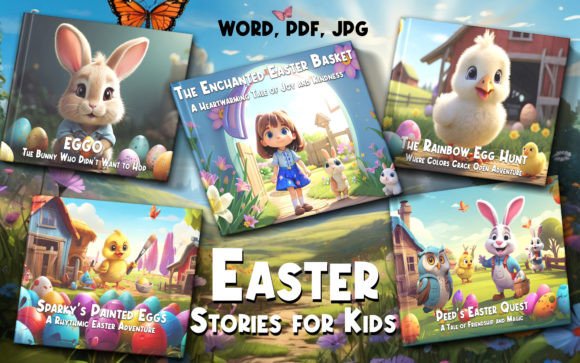
Exploring Easter Stories for Kids as a Creative Resource
For parents, educators, and creators looking to bring a personalized touch to Easter traditions, printable story templates offer a distinct approach. A product like Easter Stories for Kids is positioned as a customizable digital template pack, providing a foundation for building unique Easter-themed books. Understanding what this type of resource entails, and how it compares to other methods of creating or sourcing children's stories, is key to determining if it aligns with your specific goals.
The core offering is a set of pre-written narratives—five Easter stories—provided in multiple editable file formats (PDF, JPG, and WORD Doc). This multi-format availability is a practical strength, accommodating users with varying levels of technical comfort and different software preferences. The central proposition is not just the stories themselves, but the framework for adaptation. You can modify text, change fonts and colors, insert personal photos or drawings, and adjust the length of the final product.
Distinct Characteristics and Potential Use Cases
What makes Easter Stories for Kids distinct from a standard pre-printed book or a fixed e-book is its inherent flexibility. It functions more as a creative toolkit than a finished product. This is particularly relevant for adults who want to craft a storybook that includes family members' names, references to personal traditions, or specific illustrations that resonate with their children.
The included applications—creating a printable binder insert, a digital interactive e-book, or even a low-content book for platforms like Amazon KDP—highlight its versatility. For a grandparent wanting to make a physical, photo-filled keepsake, the printable PDF path is straightforward. For a teacher designing a simple digital story for a classroom tablet, the JPG images or editable document might be easiest. The KDP mention caters to a different audience: individuals exploring micro-publishing, though success there depends heavily on additional design, marketing, and platform-specific compliance efforts beyond the template itself.
Comparing Approaches to Easter Content Creation
When evaluating Easter Stories for Kids, it's useful to consider it alongside other common avenues for obtaining or creating holiday stories for children.
A primary alternative is purchasing finished, professionally published books. These offer high-quality, fixed narratives and illustrations. The tradeoff is a lack of personalization. They are an excellent choice if your priority is convenience and expert storytelling, but they do not allow for customization.
Another approach is creating stories completely from scratch. This requires significant time and creative skill in both writing and illustration. For those with these skills and the desire for a wholly original tale, this is the most rewarding path. However, for many, the time investment and potential creative hurdles are substantial barriers. Easter Stories for Kids sits between these poles, offering a narrative starting point and structure to reduce the burden of writing, while leaving room for personal design input.
Free online stories and printables are also widely available. These can be excellent resources, but their quality and consistency vary greatly. A template pack like Easter Stories for Kids argues for a curated, cohesive set of stories with guaranteed editing access. The decision factor here often involves weighing the value of a one-time purchase for a reliable, reusable base against the effort of searching and assembling free resources of uncertain compatibility or editing potential.
Evaluating Strengths and Practical Limitations
The strengths of such a template are clear in specific scenarios. It empowers a non-writer to produce a customized book. The "ready-made content" provides a safety net against writer's block or time constraints. The instant download and multiple formats support quick project initiation. For a family aiming to build a unique Easter tradition artifact, this can be a highly effective tool.
However, realistic limitations exist. The creative outcome is ultimately dependent on the user's own design abilities and effort. While you can change fonts and colors, creating a visually polished final product still requires some design sense or willingness to learn. The stories provided are a starting point; their ultimate appeal will be shaped by how effectively you personalize them. Furthermore, the commercial publishing (KDP) angle should be viewed pragmatically. The template provides content, but successful publication requires navigating Amazon's guidelines, cover design, formatting, and market competition—a separate and more complex undertaking.
The product also focuses on narrative stories. If your primary need is for standalone activities like puzzles, games, or complex craft instructions, this template, even with its mention of matching coloring pages, is primarily a story-centric resource. You might need to supplement it with other activity materials.
Decision Factors: When It Fits and When to Look Elsewhere
Determining if Easter Stories for Kids is the right choice involves assessing your primary objectives, skill set, and available time.
It may be an excellent fit if your goals include: creating a personalized gift or family keepsake; needing a structured starting point to overcome creative hesitation; valuing the ability to edit text and integrate personal photos; or planning a small-scale digital story project for a limited audience (like a classroom or family group). The blend of pre-written content and editable format addresses these needs directly.
You might need another option if: you seek a completely original story you will write yourself; your priority is immediate, zero-prep storytime with a professionally illustrated book; you lack interest or time for any design customization and want a finished product; or your project requires extensive, non-story-based Easter activities. In these cases, a traditional bookstore purchase, leveraging your own writing skills, or sourcing dedicated activity books would be more aligned.
The Tradeoff Between Convenience and Creative Control
Resources like Easter Stories for Kids embody a specific tradeoff common to customizable templates. They offer more convenience than total self-creation and more control than a fixed product. However, they also require you to invest some effort to realize that control. You are not passively consuming a finished item, nor are you building entirely from scratch. You are actively co-creating.
This middle path can be perfect for those who want a guided creative project. For example, a parent could use the WORD document to quickly change all character names to their children's names, use a simple design tool to add a few family photos to the JPG pages, and print a PDF for a bedtime story binder. This achieves a personalized result with moderate effort. Conversely, someone expecting a fully designed, ready-to-print storybook without any further work might find the need for customization a hurdle.
Ultimately, products in this category are tools. Their value is unlocked by the user's engagement. For the adult audience researching Easter resources, the key is to match the tool's capabilities—editable stories, format flexibility, personalization prompts—with your own project vision and willingness to execute that final step of customization. By understanding its distinct position compared to ready-made books and total DIY creation, you can make a more informed decision about whether this template will help you capture the magic of Easter in the way you envision.