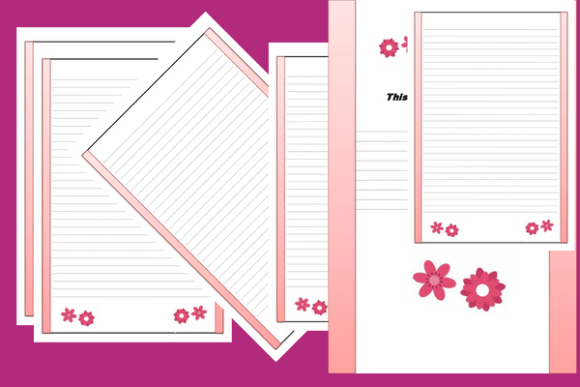
The KDP Interior Pink Notebook Lined Paper: A Convergence of Creativity and Commerce
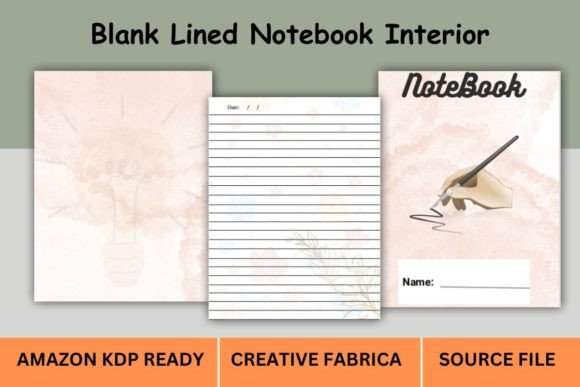
In the dynamic world of independent publishing and personal stationery, a specific product emerges not merely as a commodity but as a symbol of evolving creative workflows. The KDP Interior Pink Notebook Lined Paper represents a ready-to-use design template, engineered for the Kindle Direct Publishing platform. This interior is a 6×9 inch, 120-page file featuring lined paper adorned with pink roses and floral motifs, complete with a private information page. It is crafted to serve as a diary, scrapbook, journal, or notebook, ostensibly tailored for a female audience across all ages. Yet, its significance extends far beyond its aesthetic appeal.
Beyond a Pretty Page: The Anatomy of a KDP Interior
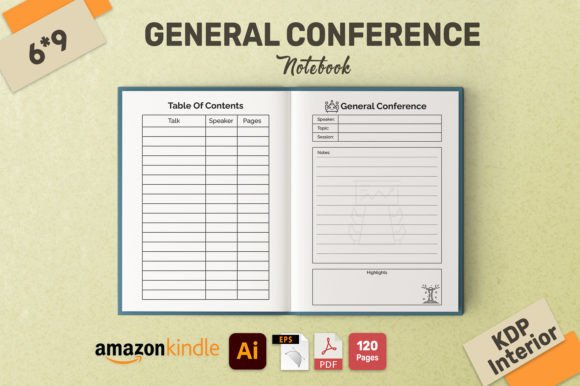
To understand its relevance, one must first dissect what a KDP interior truly is. Amazon's Kindle Direct Publishing platform has democratized book production, allowing creators to upload formatted files for printing and distribution on demand. A "KDP interior" is the complete, print-ready file for the inside pages of a notebook or book. The KDP Interior Pink Notebook Lined Paper is precisely such a product: a PowerPoint (.ppt) file designed for easy editing, enabling users to add or modify elements before uploading. This turnkey solution eliminates the need for complex graphic design software or layout expertise, reducing the barrier to entry for producing physical goods.
A Response to Shifting Creator Economics
The proliferation of these specialized interiors aligns with broader trends in creator economics and micro-entrepreneurship. Professionals, freelancers, and side-hustle enthusiasts are increasingly looking to leverage platforms like KDP to build scalable, asset-based income streams. The demand is not for generic blank notebooks but for niche-specific, emotionally resonant stationery. The pink floral design speaks directly to a market segment seeking products that feel personalized and intimate. This interior template allows a marketer or entrepreneur to quickly deploy a product that aligns with a specific lifestyle aesthetic—the "for girls and females" descriptor is a direct market positioning—without investing in custom design from scratch.
The Intersection of Technology, Design, and Personal Expression
The product's specification as a PowerPoint file is a critical, often overlooked, feature. It reflects a pragmatic understanding of user capability. PowerPoint is a ubiquitous tool familiar to most professionals, far more accessible than Adobe InDesign or specialized publishing software. This technological choice democratizes production. A freelancer can customize the private information page, adjust margins, or even integrate branding elements within a familiar interface. This ease of editing directly caters to changing workflows where agility and speed-to-market are paramount.
Furthermore, the emphasis on a "private information page" taps into contemporary concerns about organization and data sovereignty. In an era of digital overload, a dedicated physical space for personal details—addresses, important contacts, passwords (written securely)—offers a tangible, offline utility. This feature transforms the notebook from a simple writing pad into a functional life-management tool.
Observations on Market Trends and Consumer Preference
The aesthetic of pink roses and floral copy pages is not arbitrary. It connects to enduring and resurgent trends in lifestyle goods: a desire for beauty, softness, and a tactile connection to nature amidst a digital routine. This aligns with the "soft living" and mindfulness movements, where consumers seek products that enhance daily rituals with pleasure and calm. The notebook becomes an object of daily interaction that provides aesthetic satisfaction. For the entrepreneur selling this notebook, it’s a product that meets an emotional need, not just a functional one.
Practical examples abound. Consider a life coach who creates branded journals for clients, a blogger offering a custom planner as a merch item, or a small gift shop owner producing unique stock. The KDP Interior Pink Notebook Lined Paper serves as the foundational template for these ventures. Its 120-page, 6×9 inch format is a standard, popular size that balances portability with ample writing space, making it suitable for both desk use and carrying in a bag.
Why Attention is Growing: The Macro Developments
The rising attention to such products is part of a larger development: the commodification of customization. Consumers and creators alike seek unique products, but the economics of mass production often preclude individuality. Platforms like KDP, coupled with ready-made, editable interiors, solve this paradox. They enable mass customization. An entrepreneur can purchase this pink floral interior, add a unique cover design and title, and produce a seemingly custom notebook with minimal effort. This fits perfectly into the drop-shipping and low-inventory business models prevalent among digital natives.
Additionally, the growth of the "journaling" and "scrapbooking" market—driven by both mental wellness advocacy and creative hobbyist communities—provides a ripe audience. A notebook is no longer just for notes; it's a tool for self-care, memory preservation, and project planning. The multi-use suggestion ("use as a diary, scrapbook, notes or journal or any format you want") positions this KDP interior as a versatile canvas, increasing its perceived value and market applicability.
Connecting to Professional and Creative Workflows
For the professional audience—marketers, freelancers, enthusiasts—this product is a case study in efficient product development. It highlights how identifying a niche aesthetic, pairing it with a functional template, and leveraging an accessible distribution platform (KDP) can create a viable micro-business. The workflow is insightful: select a targeted interior design (like the pink lined paper), customize minimally or not at all, pair with a compelling cover, set a price, and upload. The entire process abstracts away the complexities of printing logistics, fulfillment, and global distribution, which Amazon handles.
This mirrors a broader shift in creative work: the move from being a pure creator to being a curator and assembler of pre-existing high-quality components. Success often lies in the intelligent selection and combination of assets, rather than in the exhaustive creation of every element from zero. The KDP interior is a prime asset in this new workflow.
Final Insights: Relevance in a Connected Ecosystem
The KDP Interior Pink Notebook Lined Paper is more than a digital file of floral patterns. It is a node in a connected ecosystem of digital tools, platform economies, aesthetic trends, and entrepreneurial ambition. Its relevance is secured by its dual appeal: as a beautiful, functional object for the end-user seeking a personal notebook, and as a scalable, editable asset for the creator seeking a streamlined path to market.
As needs and preferences continue to evolve towards personalized, aesthetically mindful products, and as workflows demand greater efficiency and lower technical barriers, such ready-made interiors will only grow in importance. They represent a practical convergence where technology enables design, and design fulfills emotional and functional human needs. For the forward-looking professional or entrepreneur, understanding and utilizing such assets is not just about selling a notebook; it's about participating in a modern model of creative commerce.