The Strategic Appeal of Minesweeper Variations Logic Puzzles
For many, the name Minesweeper evokes a nostalgic memory of a simple grid-based game tucked away on early computer systems. Yet, the core logic of that classic has evolved into a dedicated puzzle genre, one that offers a profound and accessible challenge for the modern mind. Minesweeper Variations Logic Puzzles distill that essential gameplay into a pure exercise of deduction, removing the random clicks and luck, and replacing them with a set of given clues that must be solved through reason alone. This transformation from a casual game to a structured logic problem unlocks a powerful tool for cognitive training, creative practice, and even professional development.
Why Logic Puzzles Are Capturing Modern Attention
In an era saturated with fast-paced digital entertainment and fragmented attention, there is a growing counter-trend towards activities that demand focus, patience, and systematic thought. Logic puzzles, like these Minesweeper variations, fit perfectly into this shift. They offer a tangible sense of accomplishment derived solely from one’s own reasoning, a quality increasingly valued by professionals, creators, and hobbyists seeking meaningful engagement beyond passive consumption. These puzzles serve as a mental gym, strengthening skills that are directly transferable: logical thinking, pattern recognition, and the methodical elimination of possibilities are foundational to problem-solving in coding, project management, strategic planning, and creative design.
The Evolution and Structure of Minesweeper Logic Puzzles
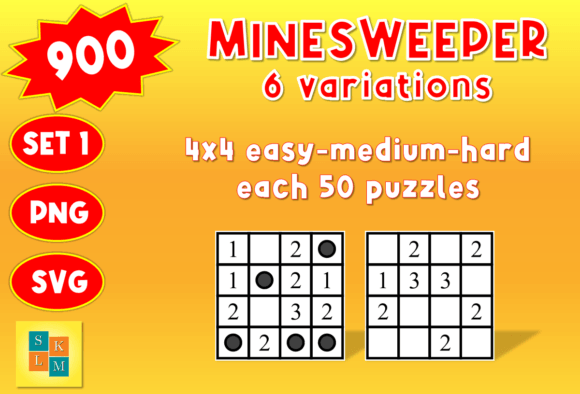
The move from the digital Minesweeper game to a static logic puzzle is a significant evolution. It removes the element of chance, making every puzzle a solvable logical deduction. A typical puzzle presents a grid—whether 4x4, 6x6, or larger—where some squares contain numbers. These numbers indicate how many "mines" are adjacent to that square. The solver’s task is to use these clues to definitively mark all safe squares and all mined squares across the entire grid. This clean, rule-based system is why such puzzles are often simply referred to as logic puzzles or logic problems; they are a pure test of deductive reasoning.
A comprehensive collection, such as one offering 900 puzzles across six variations from 4x4 up to 15x15 grids, provides a structured path for growth. Starting with smaller grids allows newcomers to grasp the fundamental patterns and strategies. As the grid size increases to 10x10, 12x12, and 15x15, the complexity scales beautifully, requiring more advanced chain reasoning and the management of larger sets of interconnected clues. The inclusion of easy, medium, and hard difficulty levels within each grid size ensures that challenge is always matched to skill, preventing frustration and encouraging progressive mastery.
Practical Benefits for Diverse Audiences
The benefits of engaging with these puzzles are both immediate and long-term. For the everyday reader or hobbyist, they provide a rewarding break, a way to unwind while still engaging the brain actively—a healthier alternative to mindless scrolling. For educators, these puzzles are excellent teaching tools for introducing logical concepts and systematic thinking to students. The provided notes on how to play and recommended tools to create puzzle books turn a collection of puzzles into a potential resource for classroom activities or self-published work.
For professionals, entrepreneurs, and freelancers, the practice is remarkably practical. The mental discipline honed by repeatedly working through these puzzles—breaking down a complex grid into manageable deductions, avoiding assumptions, and double-checking conclusions—mirrors the processes needed for debugging code, analyzing market data, or structuring a client project. It’s a form of low-stakes, high-reward training that can be done anywhere, requiring only a pencil and printout, or a digital SVG or PNG file from the provided zipped resources.
Integration into Modern Workflows and Creative Practices
Creators, marketers, and bloggers might see value beyond the personal cognitive benefit. The availability of puzzles in scalable vector graphic (SVG) and PNG formats means the assets are ready for integration into other projects. They could be used to create unique content for a blog focused on brain teasers, design a custom puzzle book for a niche audience, or even develop an app. The structured difficulty levels and clear rules make them reliable material. This aligns with a broader trend where creators are looking for high-quality, modular content that can be adapted, remixed, and presented in new formats to meet specific user expectations.
A Toolkit for Mental Agility: The 900-Puzzle Collection
Consider the practical scope of a collection containing 150 puzzles for each of six grid variations. For the 4x4 Minesweeper puzzles, the 50 easy-medium-hard puzzles serve as the perfect on-boarding platform, teaching the core "1-2 pattern" or "edge logic" in a simple environment. The 6x6 and 8x8 grids introduce more interior cells and more complex interactions, building confidence. The true test arrives with the 10x10, 12x12, and finally the 15x15 Minesweeper puzzles. Here, solvers must manage a vast field of clues, often needing to make inferences based on the global state of the board, a skill analogous to strategic planning where local decisions must consider the bigger picture.
The bundled notes and tool recommendations are a critical addition for the proactive user. They lower the barrier to not just solving, but also creating and distributing these puzzles. Whether one’s goal is to compile a book for sale, generate daily puzzles for a community, or simply understand the construction principles to better solve them, this guidance connects the activity to tangible outputs. It empowers the user to move from consumer to creator, a key desire in today’s participatory culture.
Grounded Insights for Future Engagement
The resurgence and formalization of logic puzzles like Minesweeper variations point to a sustainable trend, not a fleeting hype. As our work and lives become more interconnected and data-rich, the ability to parse information logically and deduce correct conclusions becomes more vital. These puzzles offer a controlled, enjoyable environment to practice those skills. Their digital-native origins (as SVG/PNG files) make them easy to share and use across devices, fitting into mobile lifestyles, while their print-ready nature caters to those seeking a tactile, offline experience—a balance that meets varied modern preferences.
Ultimately, Minesweeper Variations Logic Puzzles represent more than just a game. They are a scalable system for mental training, a versatile asset for creators, and a deeply satisfying challenge for the curious mind. By providing a graduated path from 4x4 to 15x15 grids, a vast library of 900 puzzles, and the tools to leverage them further, such collections meet the current demand for activities that are both intellectually substantive and practically useful. Their relevance is assured not by exaggerated claims of brain transformation, but by their proven, quiet utility in sharpening the very faculties we rely on every day.